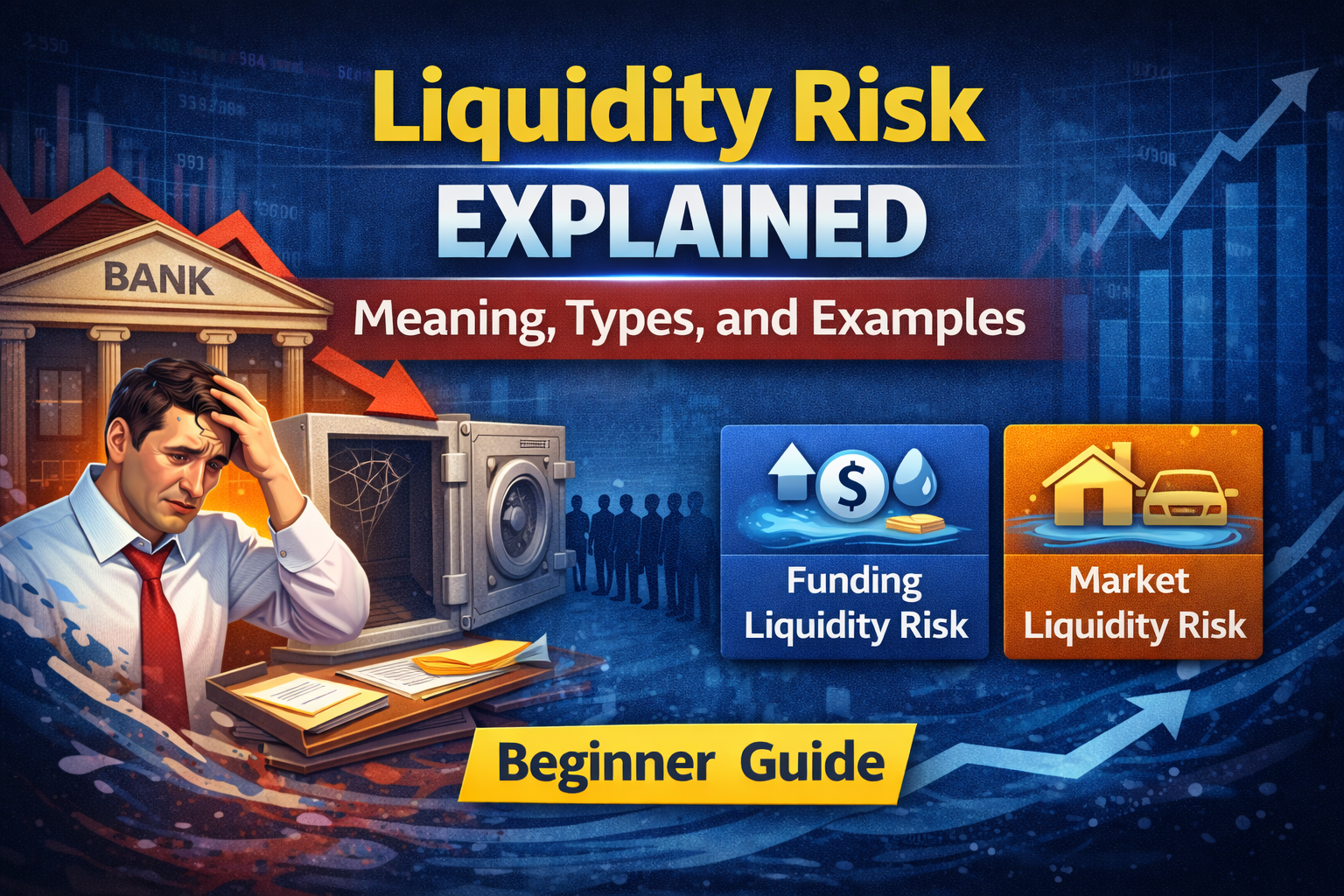
Liquidity is often called the lifeline of financial institutions. Everything may look fine on paper, but if there is no cash available when needed, even a strong institution can collapse.
This is where liquidity risk comes into play.
Liquidity risk is one of the most critical yet misunderstood concepts in finance. It becomes especially important during financial crises, when institutions struggle to meet short term obligations.
In this guide, we will break down liquidity risk in a simple, practical, and detailed way with real life examples.
What is Liquidity Risk
Liquidity risk is the risk of not having enough cash or liquid assets to meet short term financial obligations.
👉 In simple terms
Liquidity risk is the risk of not being able to access cash when you need it
Why Liquidity Risk is Important
Liquidity risk can affect
Banks
Companies
Investors
Entire financial systems
Even profitable companies can fail if they run out of cash.
Example
A company may have assets worth crores, but if those assets cannot be quickly converted into cash, it may not be able to pay salaries or bills.
This creates liquidity problems.
Real Life Example of Liquidity Risk
Let us understand this with a simple scenario.
A bank gives long term loans to customers.
These loans generate income but are not easily convertible into cash.
Suddenly, many customers come to withdraw their deposits.
The bank does not have enough cash available.
👉 This is liquidity risk
Types of Liquidity Risk
Liquidity risk is broadly divided into two types.
1 Funding Liquidity Risk
This occurs when an institution cannot meet its financial obligations due to lack of funds.
Example
A bank cannot raise money to repay its depositors.
This leads to funding liquidity risk.
2 Market Liquidity Risk
This occurs when an asset cannot be sold quickly without a significant price reduction.
Example
A company owns property worth 10 crore.
But it cannot sell it quickly without reducing the price.
This is market liquidity risk.
Causes of Liquidity Risk
Liquidity risk arises due to several factors.
1 Mismatch Between Assets and Liabilities
When long term assets are funded by short term liabilities, problems can arise.
Example
Banks give long term loans but accept short term deposits.
If many depositors withdraw money at once, liquidity issues occur.
2 Economic Crises
During financial crises, access to funding becomes difficult.
3 Loss of Confidence
If people lose trust in an institution, they may withdraw funds rapidly.
Example
Bank runs occur when many customers withdraw money simultaneously.
4 Illiquid Assets
Assets that cannot be sold quickly increase liquidity risk.
Real Life Example: Financial Crisis
During the 2008 global financial crisis, many banks faced liquidity problems.
They had assets like mortgage backed securities, but these could not be sold easily.
At the same time, investors and customers demanded cash.
This mismatch led to major financial collapses.
How Liquidity Risk is Measured
Financial institutions use various methods to measure liquidity risk.
Liquidity Ratios
These ratios assess the ability to meet short term obligations.
Example
Current ratio
Liquid assets divided by current liabilities
Liquidity Coverage Ratio (LCR)
Used by banks to ensure they have enough liquid assets to survive short term stress.
How to Manage Liquidity Risk
Liquidity risk can be managed through proper planning and strategy.
1 Maintaining Liquid Assets
Keeping cash or easily sellable assets reduces risk.
2 Asset Liability Management
Balancing short term and long term obligations.
3 Diversification of Funding Sources
Relying on multiple funding sources reduces dependency risk.
4 Stress Testing
Preparing for worst case scenarios.
Liquidity Risk vs Other Risks
Many beginners confuse liquidity risk with other financial risks.
Liquidity Risk
Inability to meet short term obligations
Market Risk
Loss due to market fluctuations
Credit Risk
Loss due to borrower default
Example
Unable to pay bills → Liquidity risk
Stock price falls → Market risk
Who Faces Liquidity Risk
Liquidity risk affects
Banks
Financial institutions
Corporations
Investors
Even individuals can face liquidity risk.
Example
If you invest all your money in real estate and suddenly need cash, you may struggle to sell quickly.
Common Mistakes People Make
Investing all money in illiquid assets
Ignoring emergency funds
Not planning cash flows
Over relying on a single income source
Importance of Liquidity Risk in FRM
Liquidity risk is a key topic in FRM certification.
FRM teaches
How to measure liquidity risk
How to manage funding gaps
How financial institutions prepare for crises
Career roles include
Risk analyst
Treasury manager
Banking professional
Real Life Scenario
Consider two companies.
Company A manages its cash flow carefully and maintains reserves.
Company B invests heavily in long term assets without liquidity planning.
During a crisis, Company A survives while Company B struggles.
The difference is liquidity management.
Final Thoughts
Liquidity risk is one of the most dangerous risks in finance because it can lead to sudden collapse even when everything seems stable.
The key is not just earning profits but ensuring that cash is available when needed.
By understanding liquidity risk and managing it effectively, individuals and institutions can protect themselves from unexpected financial stress.
If you are building a career in finance or preparing for FRM, mastering liquidity risk is essential.