Tag: market risk credit risk liquidity risk

  • Module 11: Risk Management

    Risk Management in CFA Level 3 focuses on identifying, measuring, and managing different types of risks in investment portfolios.

    Portfolio managers must ensure that risks are controlled while still achieving desired returns.

    This module emphasizes:

    • understanding different types of risk
    • using tools to manage risk
    • applying hedging strategies in real world scenarios

    Effective risk management is essential for both individual and institutional portfolios.


    11.1 Types of Risk

    Investment portfolios are exposed to multiple types of risk. Understanding these risks is the first step in managing them.


    Market Risk

    Market risk refers to the possibility of losses due to changes in market conditions.


    Sources of Market Risk

    • changes in interest rates
    • fluctuations in equity prices
    • currency movements
    • macroeconomic factors

    Example

    If stock markets decline due to economic slowdown, equity portfolios may experience losses.


    Management

    Market risk can be managed through:

    • diversification
    • asset allocation
    • hedging using derivatives

    Credit Risk

    Credit risk is the risk that a borrower or issuer fails to meet its financial obligations.


    Sources of Credit Risk

    • default on interest payments
    • inability to repay principal
    • deterioration in credit quality

    Example

    A corporate bond issuer facing financial difficulties may fail to make payments.


    Management

    Credit risk can be managed by:

    • investing in high quality bonds
    • diversifying across issuers
    • monitoring credit ratings

    Liquidity Risk

    Liquidity risk refers to the inability to quickly buy or sell an asset without significantly affecting its price.


    Types of Liquidity Risk

    Market Liquidity Risk
    Difficulty in trading assets in the market.

    Funding Liquidity Risk
    Difficulty in meeting short term financial obligations.


    Example

    Private equity investments are less liquid compared to publicly traded stocks.


    Management

    Liquidity risk can be managed by:

    • maintaining cash reserves
    • investing in liquid assets
    • matching asset liquidity with liabilities

    11.2 Risk Management Tools

    Portfolio managers use various tools and strategies to manage and reduce risk.


    Derivatives

    Derivatives are financial instruments used to hedge risk and manage exposure.


    Common Derivatives Used

    Futures
    Used to hedge against price movements.

    Options
    Provide protection against downside risk.

    Swaps
    Used to manage interest rate or currency risk.


    Example

    An investor holding a stock portfolio may use index futures to hedge against market declines.


    Hedging Strategies

    Hedging involves taking positions that offset potential losses in a portfolio.


    Key Concepts

    Reduce Risk Exposure
    Hedging aims to limit losses rather than maximize gains.

    Cost of Hedging
    Hedging may reduce potential returns.


    Common Hedging Strategies

    Equity Hedging
    Using index futures or options to protect against market declines.

    Interest Rate Hedging
    Using interest rate swaps or futures to manage bond portfolio risk.

    Currency Hedging
    Using forward contracts to reduce exchange rate risk.


    Trade Off in Risk Management

    Risk management involves balancing:

    • risk reduction
    • cost of hedging
    • potential return

    Over hedging may reduce returns, while under hedging may expose the portfolio to significant risk.


    Importance of Risk Management in Level 3

    This module is important because it helps candidates:

    • identify different types of portfolio risk
    • apply tools to manage risk
    • design hedging strategies
    • protect portfolios from adverse market conditions

    In CFA Level 3, questions often require candidates to recommend appropriate risk management strategies based on specific scenarios, making this a high scoring and practical module.
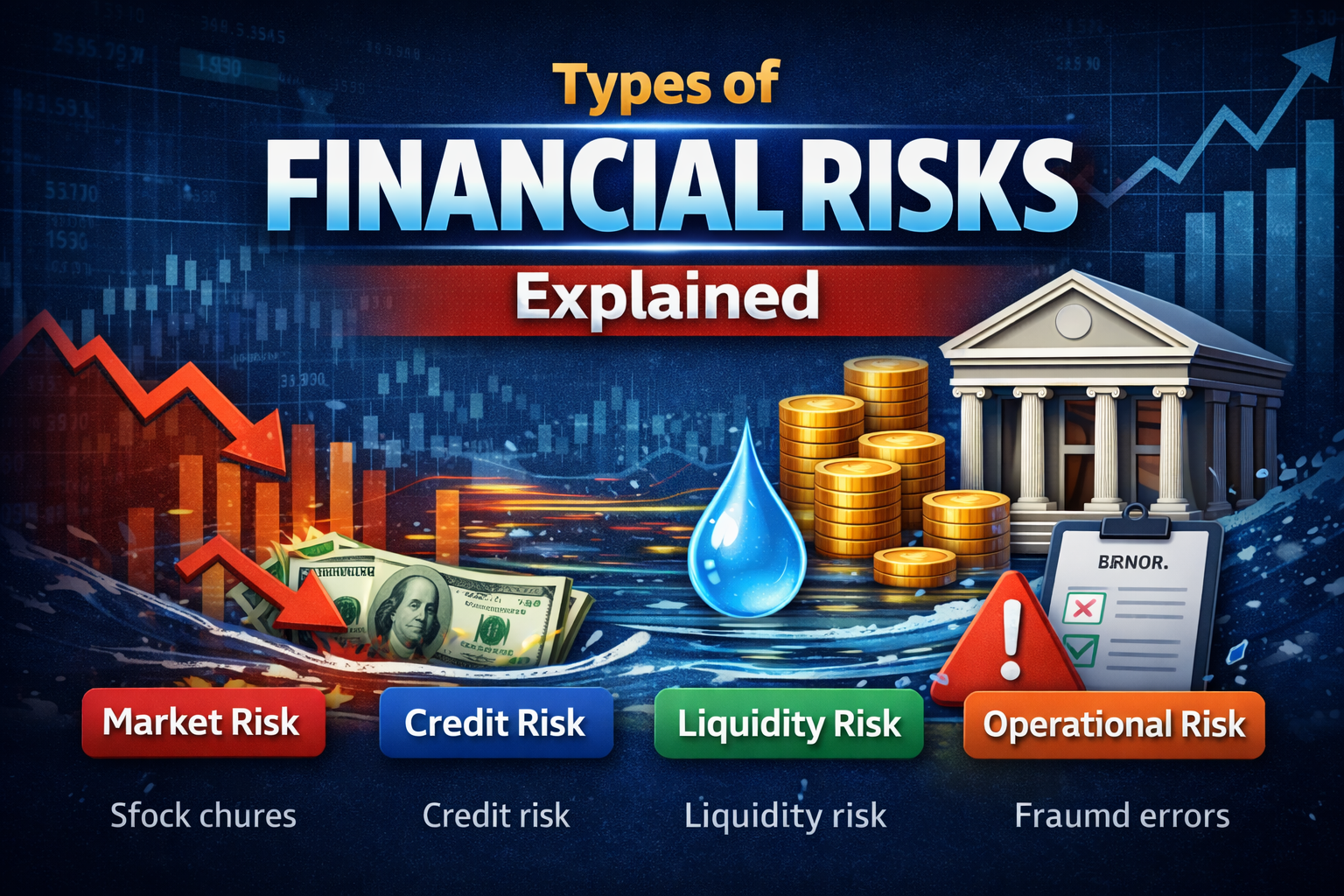
  • Types of Financial Risks Explained: Market, Credit, Liquidity and Operational Risk

    Types of Financial Risks Explained: Market, Credit, Liquidity and Operational Risk

    Finance is not just about earning returns. It is also about managing risks.

    Every financial decision, whether taken by an individual, a bank, or a large corporation, involves some level of uncertainty. This uncertainty is known as financial risk.

    Understanding financial risks is essential not only for investors but also for anyone pursuing a career in finance or certifications like FRM.

    In this complete guide, we will break down the major types of financial risks with simple explanations and real life examples.


    What is Financial Risk

    Financial risk refers to the possibility of losing money due to various factors such as market changes, borrower defaults, or operational failures.

    In simple terms

    ๐Ÿ‘‰ Financial risk is the chance that your financial decisions may lead to losses instead of profits


    Why Financial Risk Matters

    Financial risk is important because it directly impacts

    Investment returns
    Business profitability
    Banking stability
    Economic growth

    Example

    If banks fail to manage risk properly, it can lead to financial crises like the 2008 global financial crisis.

    This shows how critical risk management is in finance.


    Types of Financial Risks

    Financial risk is broadly divided into four major types

    Market risk
    Credit risk
    Liquidity risk
    Operational risk

    Let us understand each of them in detail.


    1 Market Risk

    Market risk arises due to changes in market conditions such as stock prices, interest rates, and currency values.


    Example

    An investor buys shares worth 1 lakh.

    Due to market downturn, the value falls to 80000.

    Loss = 20000

    This loss is caused by market movements, not by poor decision making.


    Types of Market Risk

    Equity risk
    Interest rate risk
    Currency risk
    Commodity risk


    Where It Occurs

    Stock markets
    Bond markets
    Foreign exchange markets


    2 Credit Risk

    Credit risk is the risk that a borrower will fail to repay a loan or meet financial obligations.


    Example

    A bank gives a loan to a company.

    If the company fails to repay, the bank faces loss.

    This is credit risk.


    Types of Credit Risk

    Default risk
    Credit rating risk
    Counterparty risk


    Where It Occurs

    Bank lending
    Corporate bonds
    Credit cards


    3 Liquidity Risk

    Liquidity risk arises when a person or institution is unable to meet short term financial obligations due to lack of cash.


    Example

    A bank has invested heavily in long term assets but does not have enough cash to meet withdrawal requests.

    This leads to liquidity problems.


    Types of Liquidity Risk

    Funding liquidity risk
    Market liquidity risk


    Real Life Example

    During financial crises, banks may struggle to convert assets into cash quickly, leading to liquidity shortages.


    4 Operational Risk

    Operational risk arises due to failures in internal processes, systems, or human errors.


    Example

    A bank employee commits fraud or a system failure leads to financial loss.

    This is operational risk.


    Causes of Operational Risk

    Fraud
    System failures
    Human errors
    Process inefficiencies


    Comparison of Financial Risks

    Risk TypeCauseExample
    Market RiskMarket fluctuationsStock price falls
    Credit RiskBorrower defaultLoan not repaid
    Liquidity RiskLack of cashBank cannot meet withdrawals
    Operational RiskInternal failuresFraud or system error

    How Financial Institutions Manage Risk

    Banks and financial institutions use structured processes to manage risks.


    1 Risk Identification

    Understanding what risks exist


    2 Risk Measurement

    Using tools like

    Value at Risk
    Stress testing


    3 Risk Control

    Reducing exposure through strategies like

    Diversification
    Hedging


    4 Risk Monitoring

    Continuously tracking risk levels


    Real Life Example of Combined Risk

    Consider a bank during an economic downturn.

    Borrowers fail to repay loans โ†’ Credit risk
    Stock markets fall โ†’ Market risk
    Customers withdraw money โ†’ Liquidity risk
    Internal systems fail due to pressure โ†’ Operational risk

    All risks can occur simultaneously.


    Importance of Financial Risk in FRM

    Understanding financial risks is the foundation of FRM certification.

    FRM focuses on

    Measuring risk
    Managing risk
    Applying risk models

    This knowledge is essential for careers such as

    Risk analyst
    Credit analyst
    Investment risk manager


    Common Mistakes People Make

    Ignoring risk while investing
    Overconfidence in market predictions
    Lack of diversification
    Not understanding different risk types

    Understanding financial risks helps avoid these mistakes.


    Final Thoughts

    Financial risk is an unavoidable part of finance. Whether you are investing, lending, or running a business, risk is always present.

    The key is not to avoid risk completely but to understand, measure, and manage it effectively.

    By learning about different types of financial risks, you can make better financial decisions and build a strong foundation for a successful career in finance.